For families
Understand early changes with clarity, and know when it may help to seek support.
Learn moreDementiaDetect is being developed to identify early signals of cognitive decline, helping people, families and clinicians move from uncertainty to earlier understanding, support and action.
Designed to support, not replace, clinical judgement.
Speech · Sleep · Steps · Signals
Dementia does not usually appear in a single moment. It often emerges through small changes over time. DementiaDetect is designed to listen for those changes across multiple signals.
Changes in language, fluency and word-finding.
Shifts in rest patterns and overall brain health.
Movement, activity and changes in daily routine.
Brought together with AI to surface patterns.
The problem
For many people and families, the first signs of cognitive change are subtle. A shift in speech. A change in sleep. A difference in routine. A moment of confusion that feels easy to explain away.
Too often, these signals are only acted on once the impact has become harder to ignore. For families, that can mean months or years of uncertainty. For clinicians, subtle change can be difficult to assess without clear, consistent information over time.
DementiaDetect exists to help change that.
people are estimated to be living with dementia in the UK today
projected by 2040 as the population ages
the NHS highlights the benefits of accurate and earlier diagnosis
Sources: Alzheimer's Society and NHS England. Figures are estimates and projections.
The approach
DementiaDetect uses AI to analyse patterns across multiple brain-health indicators, including areas such as speech, sleep, movement, cognition and behaviour, to support earlier awareness and clearer next steps.
With consent, DementiaDetect brings together relevant brain-health and behavioural information from digital tools, assessments and connected devices.
AI models look at how signals change over time, helping surface patterns that may be associated with cognitive change.
Insight can help people, families and clinicians decide when further assessment, monitoring or support may be helpful.
What it could look like
We are designing DementiaDetect to turn everyday signals into something calm and understandable: a simple view of how things are changing over time, and a clear sense of when it may help to speak to a healthcare professional.
Example insight. A small change in language patterns over recent weeks. It may help to discuss this with a healthcare professional.
Illustrative preview only. Not a diagnosis and not a real result. Final design and outputs are being developed with clinical input.
Why it matters
Earlier insight cannot remove the difficulty of dementia. But it can give people and families more time to understand, plan and access support.
Why now
Need, data and technology are converging. That is why we are building DementiaDetect now, and building it responsibly.
Around 1 million people in the UK live with dementia today, projected to reach 1.4 million by 2040.
Memory services and diagnosis routes are stretched, and recognition often comes late.
Smartphones and wearables now create passive signals that did not exist a decade ago.
Modern AI can analyse subtle, longitudinal change across many signals at once.
Health systems increasingly need earlier, scalable and responsible approaches to care.
Every late recognition is lost time for families, planning and support.
Built on responsible AI
Dementia detection is sensitive and serious. DementiaDetect is being developed with a commitment to privacy, transparency, fairness, clinical validation and human oversight from the beginning.
Personal health data is handled with high standards of security, consent and transparency.
Our tools are designed to support healthcare professionals, never to replace them.
Models are developed to be tested for bias, and claims are kept proportionate to validation.
Where we draw the line
Being honest about limits is part of being trustworthy. So we are clear and consistent about what DementiaDetect is not.
Who it is for
Understand early changes with clarity, and know when it may help to seek support.
Learn moreSupport earlier risk insight, longitudinal monitoring and assessment pathways.
Explore clinical useCollaborate on validation, pilots and responsible AI development.
Partner with us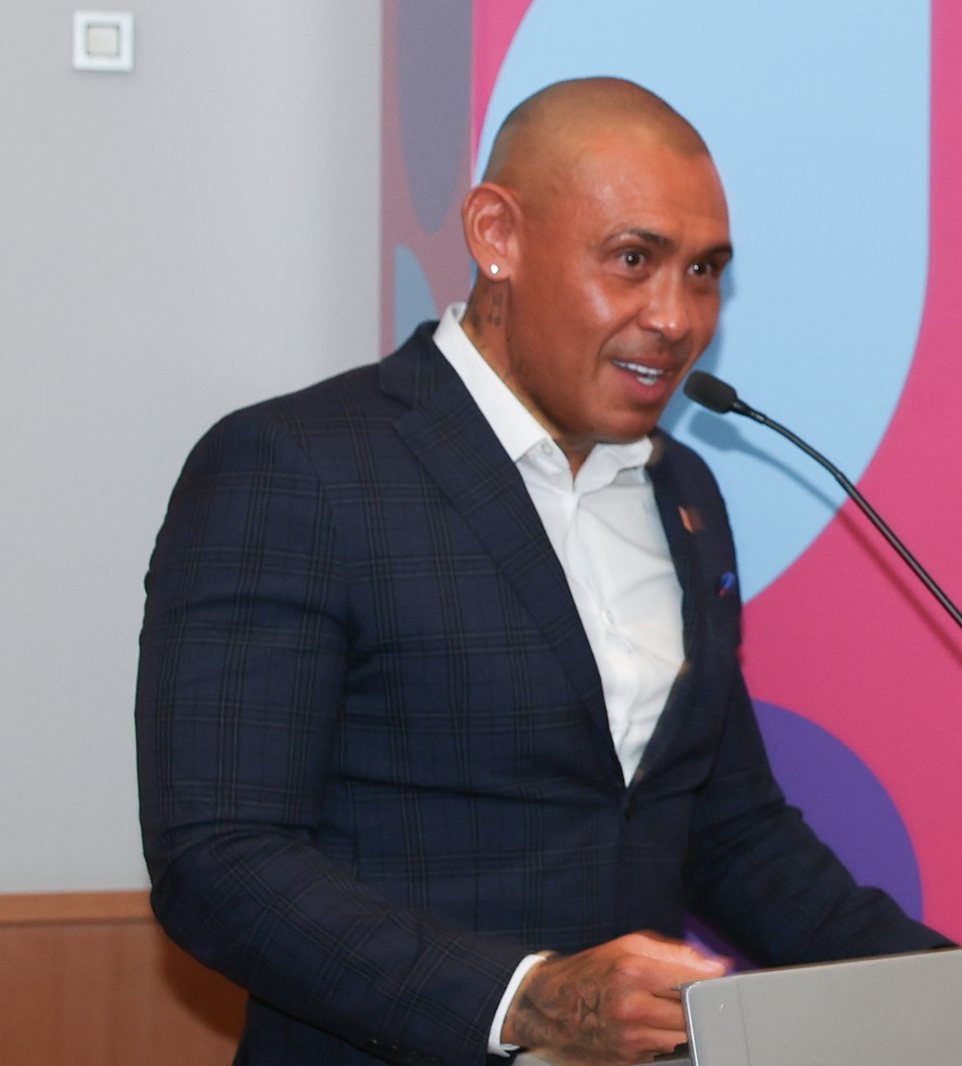
Our story
DementiaDetect began with something deeply personal.
Like so many families, we did not realise at first that the small changes we were seeing might mean something more. A moment of confusion. A repeated question. A word that would not quite come. Individually, easy to excuse. Together, they were trying to tell us something. But we did not know what we were seeing, and that is the part that stayed with me.
I cannot change what happened in my own family. But I can help build something that gives other families more clarity, more confidence and more time.
Whether you are a clinician, researcher, health system partner, investor or someone with lived experience, we would welcome your interest.